

by Dr. Susan Sugerman | Contributor
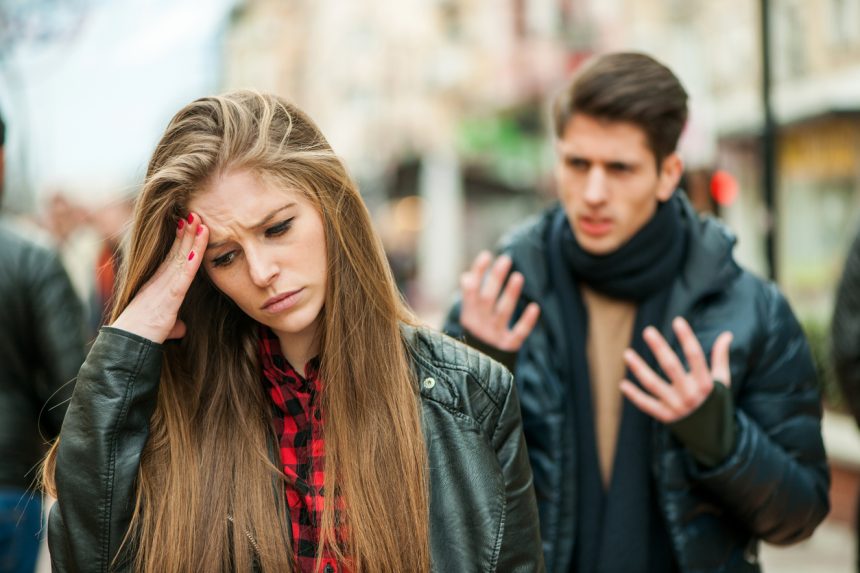
Angela is SO lucky!” her girlfriends exclaim. The quiet, shy sophomore has scored the boyfriend of the century. C.J. is a senior and the “hottest” guy in school. As her friends banter about why they don’t all have boyfriends, Angela and C.J. spend more time together, sometimes seeming to blend into one person. When her friends complain that CJ keeps her from spending time with them, Angela accuses them of being jealous. Eventually, CJ’s controlling nature and explosive anger turn to violence. By then, Angela has become isolated from the very people who could help her the most.
Those of you who have seen “Don’t U Luv Me” (by local playwright Linda Daugherty) will recognize this all too common scenario in teen (and unfortunately adult) relationships. Males and females are affected (though women are more commonly victims of physical violence). Controlling and abusive relationships happen across all ethnic and socioeconomic groups. Recognizing them is the first stop toward ending a potentially tragic cycle.
What healthy relationships look like
People in healthy relationships know who they are, or at least know who they are not. They have a sense of their own goals and are motivated to protect their own needs. They care strongly for their partners but expect to be treated well themselves. In a good relationship, each person feels more confident about who he or she already is. Healthy partners celebrate the best in each other and do not try to make the other change for their own purposes.
Teens in healthy relationships should find their grades go up, not down.
A good relationship makes it easier to be more of who you are, not less or different. Healthy relationship partners encourage one another to pursue their individual talents and dreams. Teens in healthy relationships should find their grades go up, not down. They learn to incorporate their new love interest into their lives, finding ways to balance the desire for personal intimacy with the need to stay connected to the people and activities they care about.
Healthy partners help each other handle hard stuff. Being happy is easy, especially in the early phases of romance. What matters is how two people get through what’s hard, both within their relationship and when facing external stressors. They work together to handle conflicts through mutual problem-solving and compromise rather than trying to win the fight.
What an unhealthy relationship looks like
Unhealthy relationships start out great! The beginning of a controlling relationship is full of flattery and passion. He/she wants to be with you all the time and thinks you’re the most awesome person they’ve ever met, saying things like, “No one understands me like you do!” Jealousy over time spent with your friends and your family is sweet at first but becomes suffocating and eventually hostile.
Over time, unhealthy partners become critical, condescending, and controlling. They want to know where you are, what you’re doing, and whom you’re with at all times. You should “wear this,” not that. You should “be with me,” instead with the people or doing the things you care about. You should stop pursuing your dreams (because “you’ll never make it, anyway”). Eventually come the direct insults and name calling. The abuser checks your texts and phone records. He/she threatens to do something to harm you or your reputation (e.g. send inappropriate photos, spread rumors, etc.) if you don’t comply with their wishes.
Victims begin to believe it is their own fault. The abusive partner makes you feel ashamed or unworthy of anything better. You begin to believe it when you are told, “It’s your fault that I got upset (or wrecked my car or failed my test)!” You justify the behavior to others, saying, “He was having a bad day,” or “Well, I made her mad because I forgot to run that errand.” Commonly, abusers threaten to kill themselves if you leave them. You begin to feel compelled to tiptoe around situations trying not to trigger any more outrage or violence.
You begin to believe it when you are told, “It’s your fault that I got upset (or wrecked my car or failed my test)!”
Eventually the victim becomes isolated from the very people they need to help them. After a while, friends and even family stop trying to change your mind about your partner. They get used to you backing out of plans at the last minute. They give up hoping you will call them back. By the time you realize you need help, it can be hard to find.
Weeks, months, or even years later…Relationships can become physically or sexually abusive. Beware of suspicious of black eyes, reports of “accidentally” tripping down stairs, etc.
What Parents Can Do
Teach your children to demand what they deserve. Teens have the right to feel honored in their relationships, to have their own space, to keep their friends, to include their family, and to feel good about who they are. Teach them that relationships involve compromise, but a good relationship should help a person feel more secure and confident without feeling the need to alter his or her identity.
Teach communication and limit setting. Help your child to set and reinforce self-protective boundaries. Be willing to let them blame you for curfews, technology limits, time with family, etc.
Remember that no one “asks” to be abused. Unhealthy relationships evolve over time. Abusers tend to be charismatic and charming. What starts out as a strong connection full of flattery and admiration can turn jealous and controlling before the victim realizes it is happening. Even healthy people can end up in unhealthy situations.
Try not to judge your child too quickly for not “fixing” it. Remember if your child had the insight and skill to end the relationship it would have been over by now.
Be patient and understanding. Leaving is hard. The relationship is probably not all bad. Often still drawn to the good that does exist in the relationship, the victim defends the abuser from accusations of friends and family. They don’t want the relationship to end; they just want the abuse to stop. Help your child honor the good memories while being clear that the bad parts of the relationship are dangerous and not likely to change. It will take your repeated loving but firm insistence that you understand how hard it is but that you will not continue to allow them to be in a controlling or dangerous situation.
Try not to get too frustrated too fast when your child hangs on to a potentially bad relationship. Take time to process the situation in your own mind and come up with a measured, reasonable approach. Try not to judge your child too quickly for not “fixing” it. Remember if your child had the insight and skill to end the relationship it would have been over by now.
Be willing to be the bad guy. When your child truly is ready to separate from a dangerous situation, they will need your help in very significant ways. Their abuser knows which “buttons to push” or threats to make to weaken defenses and lure them back. Let your child blame you for cutting the off from their abusive partner. Set firm curfews, deny access to the car, and make it known publicly (especially to the abuser) that you are monitoring their social media postings. Use “Parental Controls” through your phone carrier to help restrict calls and texts to and from certain numbers (though beware of texting apps that can get around this). Change the abuser’s contact information in your child’s phone to read “DO NOT ANSWER” so that she/he is not tempted the next time a call comes through. Help your child to find alternative activities to stay busy and accountable to other responsible peers and adults. If necessary, get the police or the school involved. Sometimes, involving the abuser’s own parents is appropriate if it can be done sensitively. In an ideal world, those parents can help their child get counseling support in order to change behaviors in the future.
Keep some perspective–things that are hard are not without value. Developing healthy relationship skills takes time and experience. Help your child learn from his or her mistakes. They will learn what NOT to tolerate in the future.
ABOUT THE AUTHOR Susan Sugerman, MD, MPH, FAAP

Dr. Susan Sugerman is the president and co-founder of Girls to Women Health and Wellness, a multidisciplinary medical practice in north Dallas dedicated to the physical and emotional needs of girls and young women ages 10-25. She is a graduate of Stanford University, Baylor College of Medicine and the University of Texas School of Public Health in Houston. She did her residency training in Pediatrics in Cincinnati, Ohio, and a Robert Wood Johnson Fellowship in Health Services Research at UCLA with an emphasis on confidentiality and access to care for adolescent and young adult women.
She is Board Certified in Pediatrics and is a Fellow of the American Academy of Pediatrics. She holds memberships in the Society for Adolescent Medicine and the North American Society of Pediatric and Adolescent Gynecology.
Dr. Sugerman speaks to parent and professional audiences on subjects such as parenting, adolescent development, dating safety, sexuality, nutrition and body image, bullying, and preparing for college.
“Being able to have someone with whom to communicate comfortably and accurately about sensitive subjects is crucial to successfully navigating through adolescence,” says Dr. Sugerman.